The Future of Carbon Trading: AI, Blockchain, and Carbon Assets
Introduction
Forward-looking companies are transforming carbon credits and verified carbon assets into financial assets worth billions, capitalizing on a market that saw global carbon pricing revenues surpass $100 billion in 2024. Carbon assets are now integrated as collateral for green loans, form the foundation for ESG ratings, and support the creation of carbon-backed securities in various emerging markets.
Beyond Offsets: How Businesses Use Carbon Credits Strategically
Companies are no longer treating carbon credits as one-time offsets for emissions. Instead, they are integrating them into financial instruments, supply chain metrics, and ESG ratings.
Carbon Assets as Financial Instruments
Verified carbon assets are increasingly accepted by financial institutions as collateral for sustainability-linked loans. This provides companies with incentives that align financing terms with transparent carbon management and asset quality. This development is helping businesses unlock more favorable financing and embed carbon assets into their risk and capital strategies.
A leading example of innovation in this space is JPMorgan’s Kinexys Digital Assets (KDA) platform, which tokenizes voluntary carbon credits on a blockchain to produce auditable, tradeable carbon assets. This platform addresses major market challenges such as standardization, transparency, and liquidity. It enables CFOs and sustainability officers to seamlessly integrate carbon assets into treasury operations and ESG frameworks. Moreover, tokenized carbon credits can be combined into composite carbon asset portfolios, diversifying risk and tailoring sustainability impact to corporate goals.
Competitive Positioning in Supply Chains
Businesses managing carbon asset portfolios gain a competitive edge in global trade. This advantage is especially strong in Europe and North America, where carbon regulations dictate procurement strategies. Carbon assets influence ESG ratings, investor confidence, and supplier contracts.
The Future of Verification: Building Trust in Carbon Assets
Technology
Use Case
Advantages
2025 Adoption Trend
AI-Driven MRV
Satellite/sensor-based carbon asset verification
Greater accuracy, fraud reduction
Verified carbon assets increase buyer/supplier confidence by ~30%
Blockchain Ledger
Recording, issuing, and trading carbon assets
Immutable records, no double-counting
Tokenised carbon assets traded for transparency and traceability on exchanges
Market Trends in Carbon Asset Pricing
According to Sylvera’s Q3 2025 Carbon Data Snapshot, high-quality carbon credits have reached record price levels in 2025 as market trust and verification improve significantly. Prices for afforestation, reforestation, and revegetation (ARR) credits climbed from about $14 per tonne early in the year to approximately $24 per tonne by September. This premium pricing reflects buyers’ increasing demand for credits that offer verified and durable climate impact combined with social and environmental co-benefits.
The voluntary carbon market, valued at $4.04 billion in 2024, is forecast to grow sharply to between $50 and $100 billion by 2030. Nature-based, renewable energy, and technology-driven removals are driving this expansion. Prices vary widely based on project type and integrity, with high-quality credits commanding significantly higher value.
What’s Changing?
Satellite monitoring now enables real-time verification of reforestation projects to ensure forest maintenance post-credit issuance. Meanwhile, independent carbon marketplaces are moving from project-level credits toward sector-wide governance, enforcing stricter standards to support market integrity and growth.
Financing Coal Phaseouts with Carbon Assets
Carbon assets accelerate coal plant retirements through emission buyouts and transition-linked credits. They redirect financial flows toward renewable energy adoption and cleaner industrial growth.
Unlocking Potential in Indian Agriculture
India’s agricultural sector is increasingly integrating carbon assets through agroforestry, biogas projects, and soil carbon sequestration techniques. While millions of smallholder farmers stand to benefit, the lack of financial incentives and technical expertise remains a barrier. Simplified verification frameworks and aggregated carbon credit pools are essential to unlock broad participation and create meaningful rural income streams aligned with climate goals.
Looking Ahead: Where Carbon Markets Must Evolve
Carbon credits are shifting from offset tools toward strategic financial assets, supply chain metrics, and transition funding mechanisms. The next phase of carbon markets will depend on:
- AI-driven verification to eliminate fraud risks.
- Stronger financial frameworks integrating carbon assets into sustainability-linked investments.
- Sector-wide credit systems replacing isolated project-based offsets.
What is your next move in the carbon market? Share your strategy: Which of these new technologies—AI or blockchain—do you expect to have the biggest impact on your corporate finance decisions? Consider the changes you anticipate over the next 12 months.
What Are Carbon Credits and Why Do They Matter
As climate commitments grow, carbon credits have moved beyond basic compliance. They’re now a strategic lever for managing risk, strengthening supply chains, and standing out in the market. CXOs who take a proactive approach to carbon markets can unlock financial value, build trust, and stay ahead of regulatory shifts.
This first instalment in our Carbon Series demystifies carbon credits: what they are, where they come from, and why global business leaders need to pay attention—now, not later.
What Are Carbon Credits?
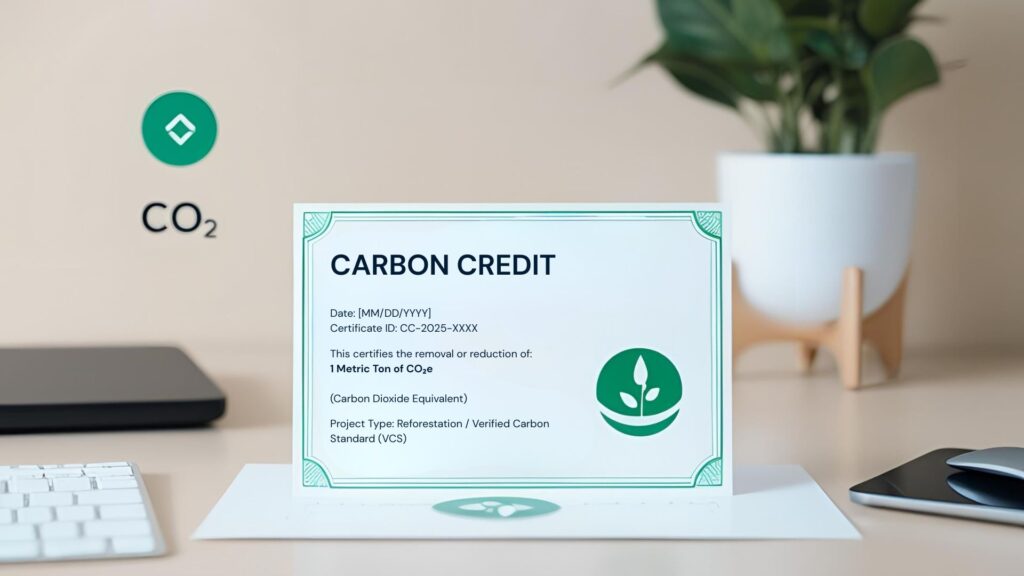
Carbon credits are permits that represent the reduction or removal of one metric tonne of carbon dioxide (CO₂) or an equivalent amount of other greenhouse gases (GHGs). These credits are used to offset emissions that a company or country cannot eliminate internally.
There are two broad categories of credits:
- Avoidance Credits: These prevent future emissions. Common examples include forest conservation or renewable energy installations that displace fossil fuels.
- Removal Credits: These actively remove carbon from the atmosphere, think reforestation or direct air capture technologies.
Each credit equals one tonne of CO₂e (carbon dioxide equivalent), verified by third-party standards to ensure that the reduction or removal is real and measurable.
Why Were They Introduced?
Governments and institutions developed the concept of carbon credits to drive economic efficiency and global cooperation in cutting emissions.
Kyoto Protocol: Laying the Foundation for Carbon Markets
The Kyoto Protocol (1997) introduced market-driven mechanisms to help nations meet climate targets more efficiently. It formalised the Clean Development Mechanism (CDM), enabling developed nations to invest in emission-reduction projects in emerging economies in exchange for credits. This system established the groundwork for carbon trading and cross-border collaboration.
Paris Agreement: Strengthening Market Oversight
The Paris Agreement (2015) built upon Kyoto, ensuring deeper global cooperation. It introduced Article 6, which formalised international carbon trading mechanisms:
- Article 6.2 enables direct country-to-country carbon trades.
- Article 6.4 establishes a global compliance market, expected to be fully operational in 2025, following agreements reached at COP29 in 2024.
While Article 6 enhances transparency and accessibility in carbon trading, key challenges remain, including ITMO authorisation, reporting transparency, and verification of carbon removal projects.
The Carbon Credit Market: Compliance vs. Voluntary
Today, there are two primary markets for carbon credits:
- Compliance Markets: Government-regulated trading systems (e.g., the EU Emissions Trading System), where industries must offset emissions according to legal mandates. Traders and regulators currently value these markets at €865 billion a year.
- Voluntary Carbon Markets (VCM): Companies purchase credits to meet their own sustainability targets. According to McKinsey, the VCM was valued at $1.3 billion in 2022, with projections suggesting it could exceed $50 billion by 2030.
The rapid growth of voluntary markets reflects increasing corporate ambition, but also highlights the need for stronger governance, transparency, and quality control.
What Does a Carbon Credit Cost?

The price of carbon credits varies widely based on the project type, location, and certification standard.
Prices range from a few dollars to over $100 per credit, depending on:
- Project type (e.g., renewable energy vs. direct air capture).
- Location (e.g., California’s regulated market may price credits differently from voluntary credits in developing regions).
- Certification and credibility (higher-integrity credits command premium pricing).
Simply put: Not all credits deliver the same value—buyers must judge quality, not just price.
Challenges in the Carbon Credit System
Despite its potential, the carbon credit ecosystem faces growing pains:
- Double Counting: A renewable energy project in Brazil could issue credits purchased by a multinational while the Brazilian government also claims the reduction, leading to integrity issues.
- Market Fragmentation: With multiple standards and registries, navigating carbon credit trading is challenging. Initiatives like the Integrity Council for the Voluntary Carbon Market (ICVCM) are working to standardise criteria.
- Low Market Participation: While the VCM reached $1.3 billion in 2022, many companies remain hesitant due to regulatory uncertainty and concerns over credit quality.
- Credibility Issues: Some credits lack additionality (meaning the project would have happened anyway, even without funding), weakening their true climate impact.
These challenges reinforce the need for rigorous due diligence, transparency, and standardised verification processes in carbon markets.
Actionable Framework: ESG Carbon Credit Maturity Model
Awareness & Exploration
- Understand carbon credits and regulatory impacts.
- Assess market opportunities and identify key stakeholders.
Strategy & Integration
- Set carbon offset goals aligned with net-zero commitments.
- Conduct risk assessments on credit quality and compliance implications.
- Integrate carbon credits into ESG and financial strategies.
Implementation & Optimisation
- Invest in verified carbon credits to ensure credibility.
- Establish transparent reporting mechanisms for stakeholders.
- Monitor carbon pricing trends to assess financial impact.
Leadership & Market Differentiation
- Move beyond compliance and leverage credits strategically.
- Explore emerging financial instruments like ETFs and carbon-backed securities.
- Engage in industry partnerships to shape best practices.
Evaluating Carbon Credit Engagement
Define Business Priorities
- Determine whether carbon credit engagement is driven by compliance needs or voluntary commitments.
- Assess financial risks and opportunities of carbon investments.
Assess Credit Quality
- Verify credits from high-integrity registries such as Gold Standard and Verra.
- Ensure credits meet additionality, permanence, and transparency standards.
Establish Governance & Reporting
- Set internal procurement and disclosure policies for credits.
- Align purchases with science-based targets to enhance credibility.
Monitor & Adjust Strategy
- Evaluate the financial impact of credit investments.
- Explore new financial instruments like ETFs and securitised carbon assets.
- Use carbon credits for competitive differentiation in supply chains.
Looking Ahead
Carbon credits are not a silver bullet, but when backed by rigorous verification and credible net-zero strategies, they remain a powerful tool for businesses.
Key Takeaways
- Carbon credits should complement, not replace, direct emissions reductions.
- Quality and transparency are essential to prevent reputational risks.
- Stay informed, policy and market dynamics are evolving rapidly.
In Part 2, we’ll break down how carbon credits are generated and verified—and how companies can buy, trade, and sell them effectively without falling into common traps.