By Dr Renuka Thakore
The world is witnessing a critical juncture in sustainability, with Environmental, Social, and Governance (ESG) frameworks becoming fundamental to business strategy. Yet, the role of women in advancing sustainability and ESG leadership remains vastly underrepresented. While more women are graduating from universities than ever before, their progression into senior research, decision-making, and leadership roles remains alarmingly low—women make up over 50% of graduates but hold only 28% of senior leadership positions globally. This glaring disparity highlights the need for urgent interventions to foster gender-inclusive sustainability leadership.
The Gendered Impact of Environmental Degradation
Environmental challenges disproportionately affect women due to their social roles, economic vulnerabilities, and cultural constraints. When climate-related disasters strike, it is women—especially those in rural and low-income communities – who bear the brunt.

- Fuel Poverty & Energy Access: Women in many parts of the world are still responsible for household energy needs. In Africa, nearly 600 million people lack electricity, and women spend over 200 million hours daily collecting firewood, exposing them to health hazards and limiting economic opportunities.
- Pollution & Health Risks: Women working in manufacturing and agriculture are frequently exposed to pollutants, pesticides, and toxic waste, leading to increased respiratory diseases, reproductive issues, and long-term illnesses.
- Water & Food Scarcity: Climate-induced droughts and erratic rainfall patterns jeopardise food security—and since women account for 43% of the global agricultural workforce, their livelihoods and nutritional well-being are at significant risk.
Women in ESG Governance: The Representation Gap
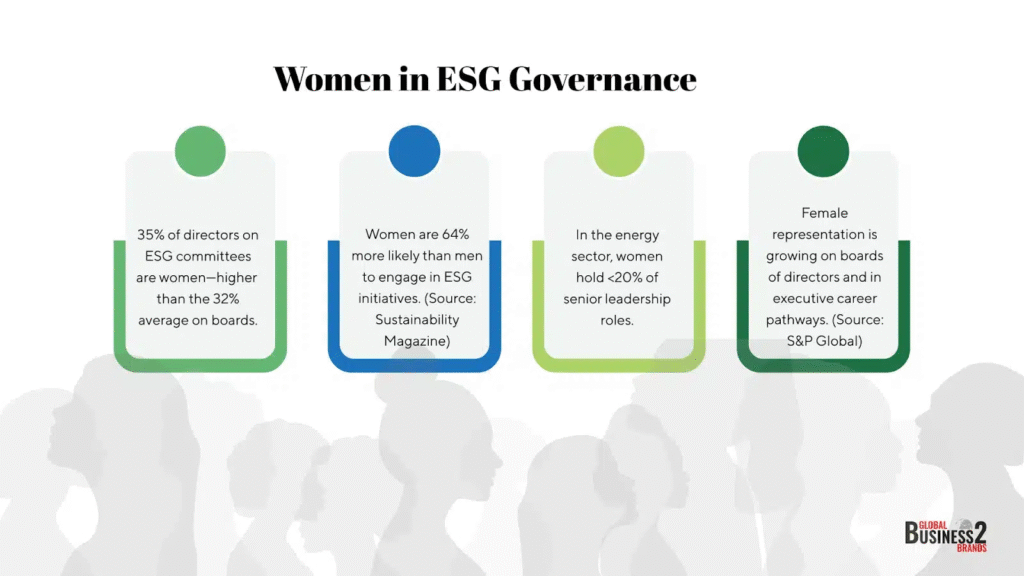
Despite the growing importance of sustainability-driven governance, women’s voices remain significantly underrepresented in leadership roles across corporations, policy-making institutions, and governance structures. Currently, women hold just 10–30% of governance positions across corporate boards, political offices, and regulatory bodies. In many cases, women are included merely for symbolic representation, akin to greenwashing in environmental policies – an illusion of progress rather than real impact.
This lack of representation results in ESG policies that overlook the nuanced gender-specific challenges within sustainability strategies, making it even more critical to prioritise women’s leadership and equity in ESG frameworks.
Breaking Barriers: Strategies for Inclusive ESG Leadership
To truly embed gender equity into sustainability leadership, a multi-stakeholder approach is required – ranging from corporations and policymakers to communities and academic institutions. Here are some key strategies to turn the tide:
Inclusive Workforce & Policy Reforms
Workplace policies that uphold gender equity and remove systemic barriers are a prerequisite for building a sustainable tomorrow.
- Establish workplace policies that support female employees, including maternity leave, childcare support, and menstrual hygiene facilities.
- Ensure equal pay and equitable career growth pathways in sustainability-driven industries such as agriculture, construction, and manufacturing.
Empowering Women in Agriculture & Land Ownership
Women’s participation in agriculture is vital for food security and environmental sustainability, yet they face significant barriers to ownership and investment.
- Advocate for land rights reforms to ensure women have ownership and decision-making power in agricultural sustainability.
- Provide microfinancing and investment opportunities tailored for women-led agribusinesses and green enterprises.
AI & Tech Equity in Sustainability
The impact of AI, which has emerged as a key component driving ESG activities, is contingent upon the fairness and diversity of the data it is trained on.
- AI and digital transformation are shaped by existing patterns, and if these patterns lack gender diversity, AI will reinforce inequalities.
- A conscious effort is needed to develop AI-driven ESG solutions that actively incorporate diverse data inputs, ensuring fair and inclusive decision-making.
Female Representation in Governance & Decision-Making
Diverse leadership leads to more inclusive, effective, and sustainable policies, making it essential to amplify women’s voices in decision-making roles.
- Increase women’s participation in corporate ESG committees, government sustainability councils, and UN climate leadership platforms.
- Implement mentorship and sponsorship programs that help women rise to senior leadership in sustainability sectors.
Behavioural & Cultural Change
Shaping a more sustainable and equitable future requires challenging deep-rooted biases and fostering inclusive mindsets from an early stage.
- Foster gender-sensitive education and community programs that challenge stereotypes and promote women’s active roles in sustainability.
- Encourage family and social structures to support female leadership from an early stage.
Closing the Gender Gap in ESG & Sustainability
The current ESG landscape cannot drive meaningful and lasting change without gender equity. Women must not only be included in sustainability governance but empowered to lead – because their perspectives, experiences, and expertise are essential for holistic, impactful, and just sustainability solutions.
By integrating gender-inclusive policies, leveraging AI for equitable decision-making, and reforming governance structures, we can pave the way for a truly sustainable and inclusive future.
The time for action is now – because sustainability without gender equity is simply unsustainable.
